62M tonnes
of electronics thrown out in 2022
Less than a quarter of it was properly collected and recycled. The rest gets burned, buried or picked apart by hand, often by people paid next to nothing.
Source: UN Global E-waste Monitor 2024
Chukua is a free app for giving things to people who live near you. Post the cot, the desk, the sack of clothes. Someone a few streets away claims it and comes for it. Nobody sells anything and nothing goes to the dump.
v1.3.5 · Android 7+ · 22 MB · older phone?
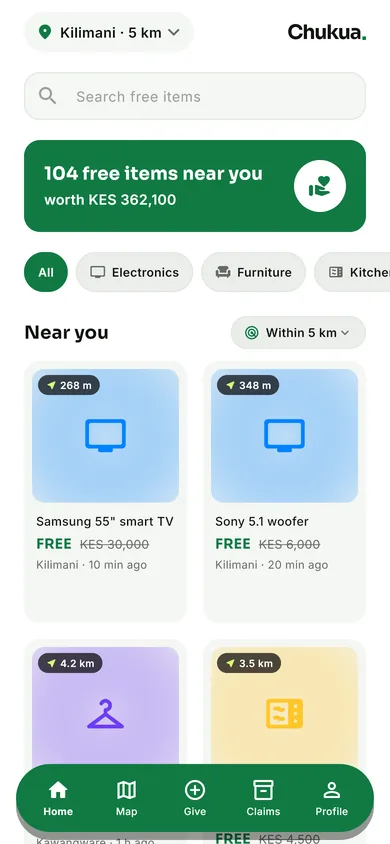
Samsung 55" smart TV
Worth KES 18,000 – 30,000
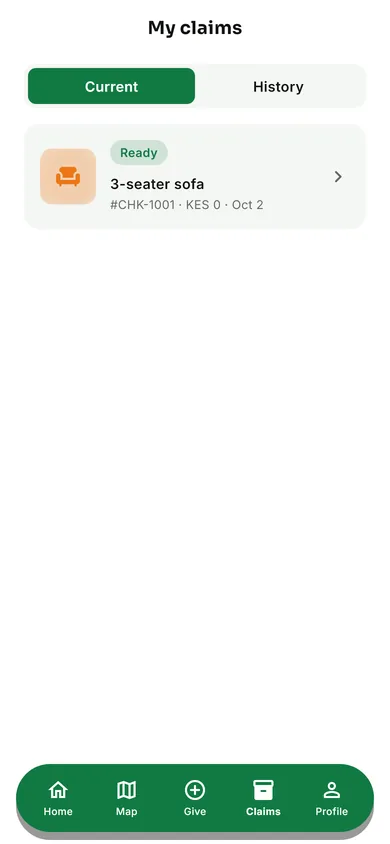
3-seater sofa, Kileleshwa
949 m away · must go by Fri
In Nairobi
There’s no delivery and nobody in the middle. You agree a time in the chat, turn up, and get it home however you can. On foot, on a boda, on a mkokoteni.
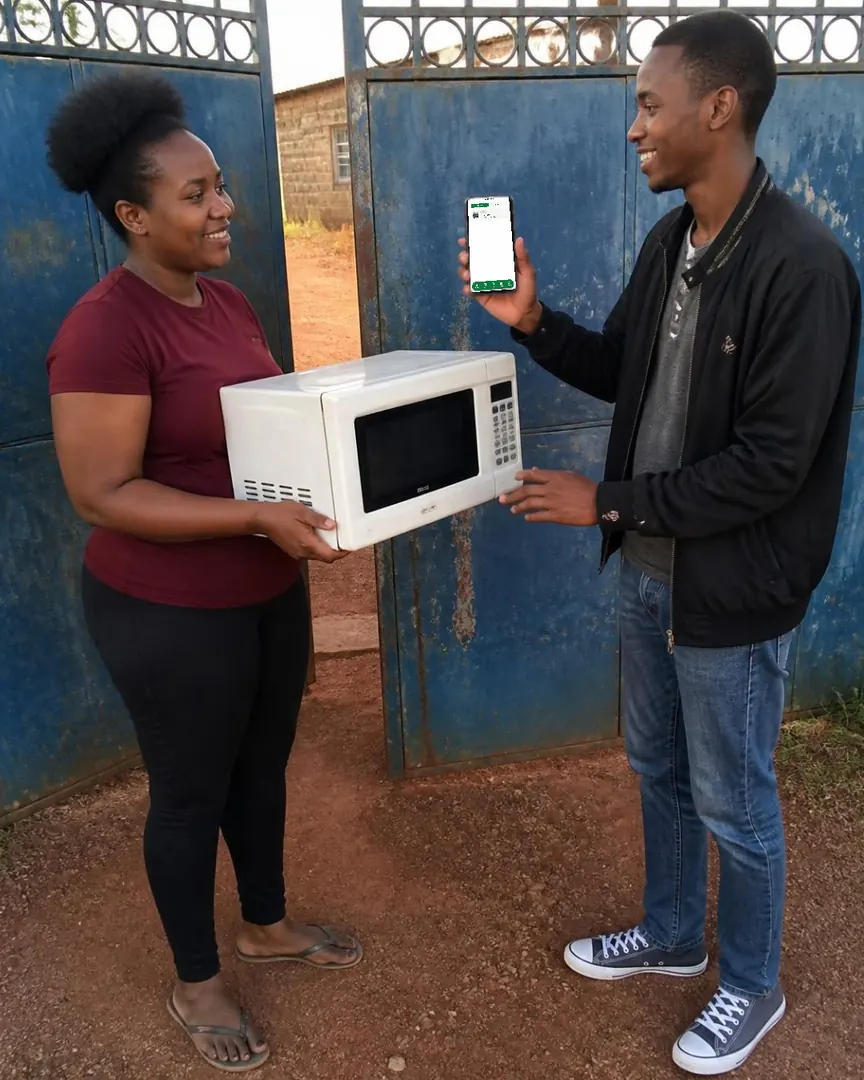
Umoja
A microwave, collected at the gate
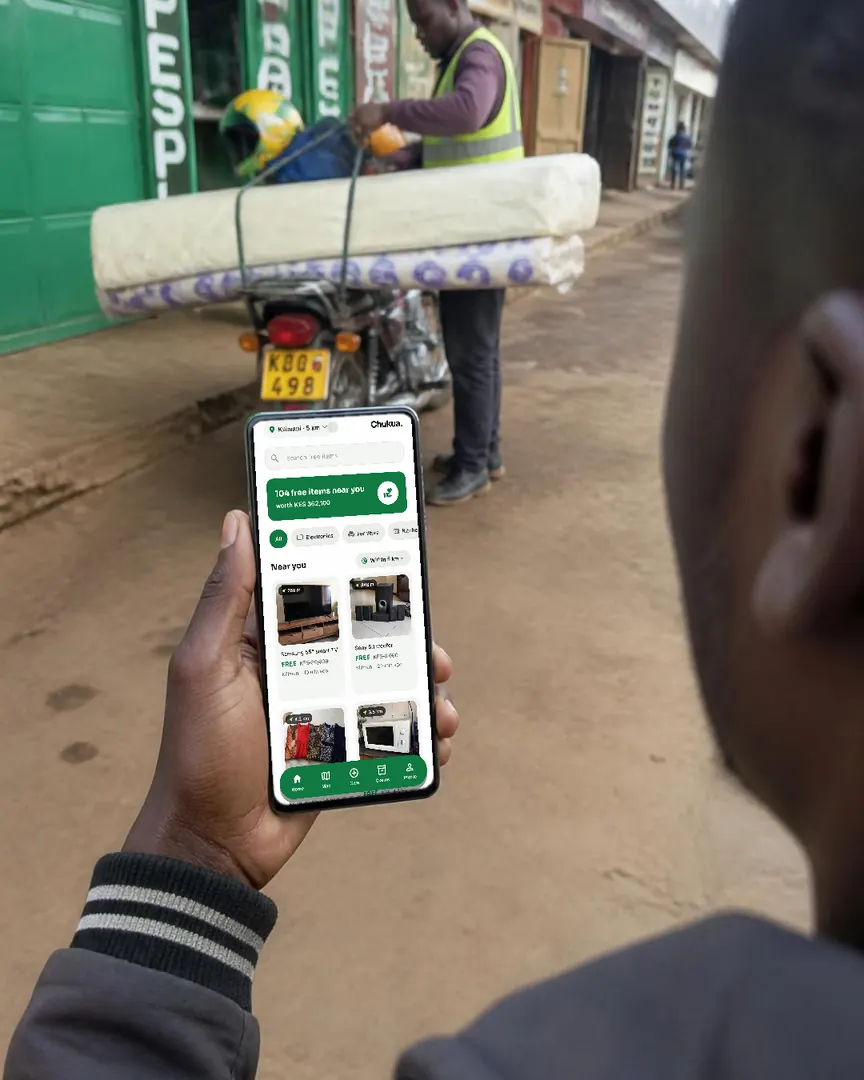
Kasarani
A mattress, home by boda
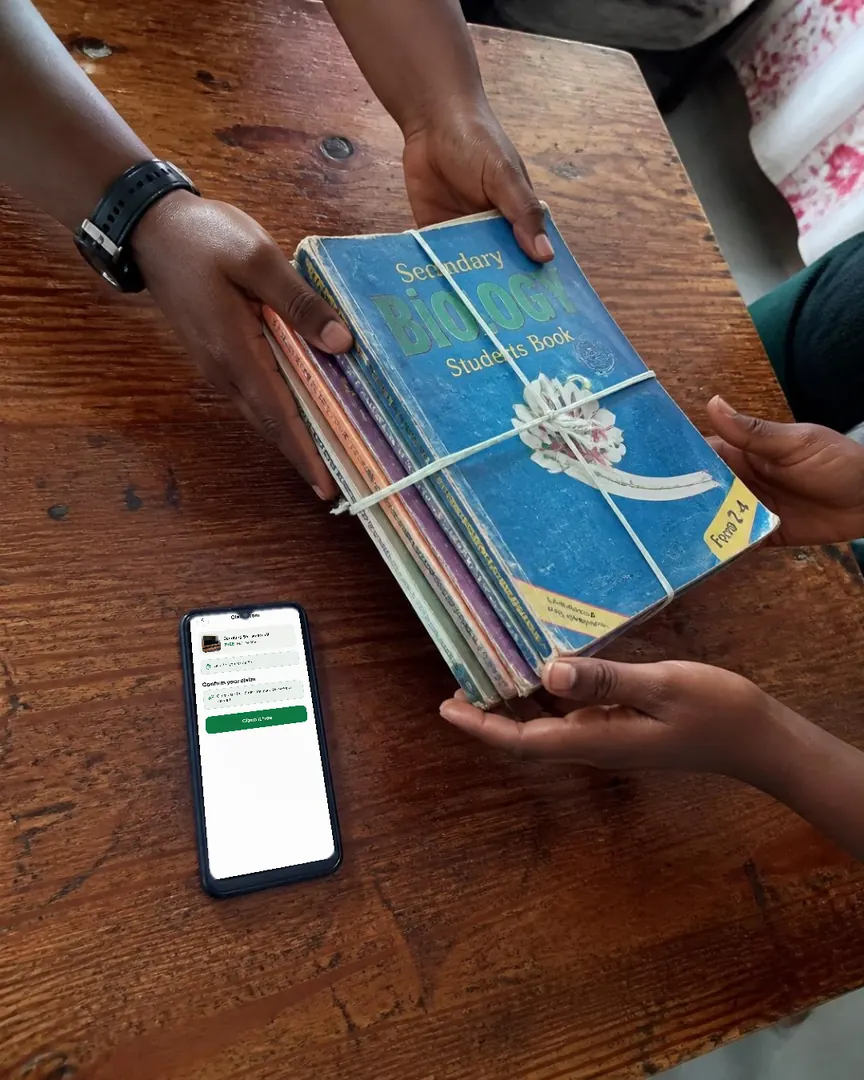
Madaraka
Revision books, on to the next student
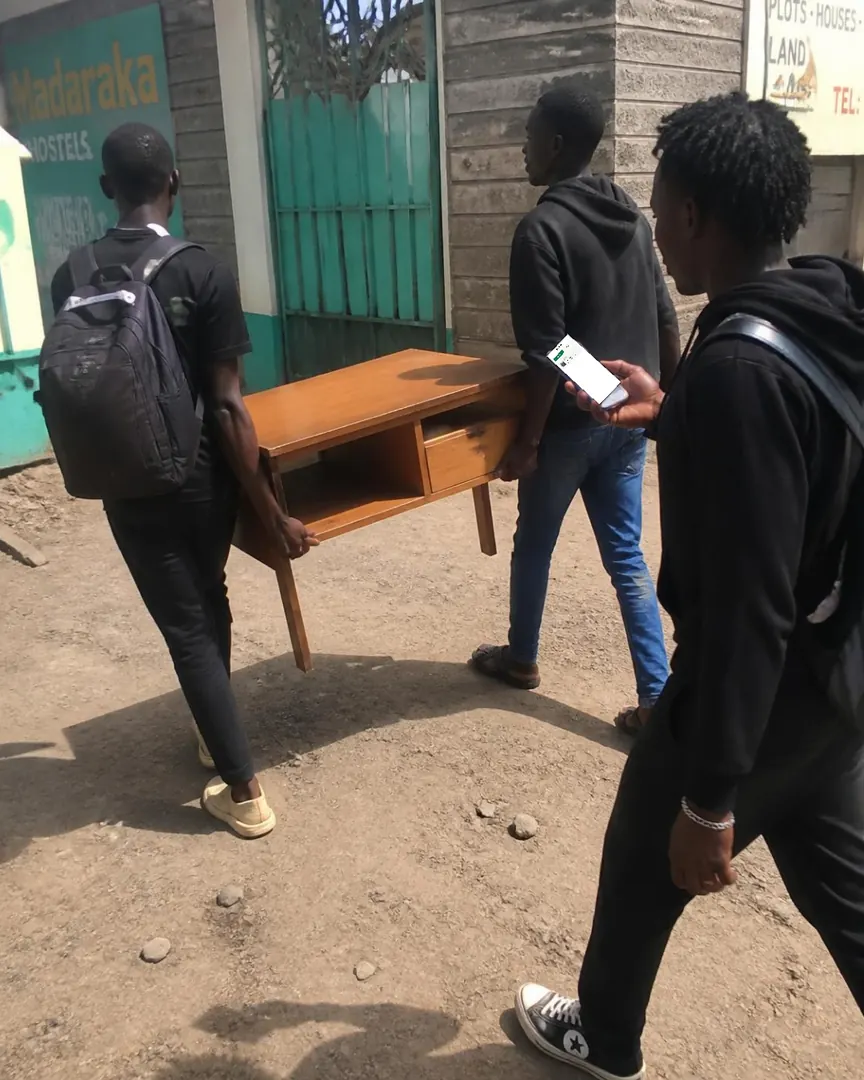
Madaraka
A desk, out before the semester ends
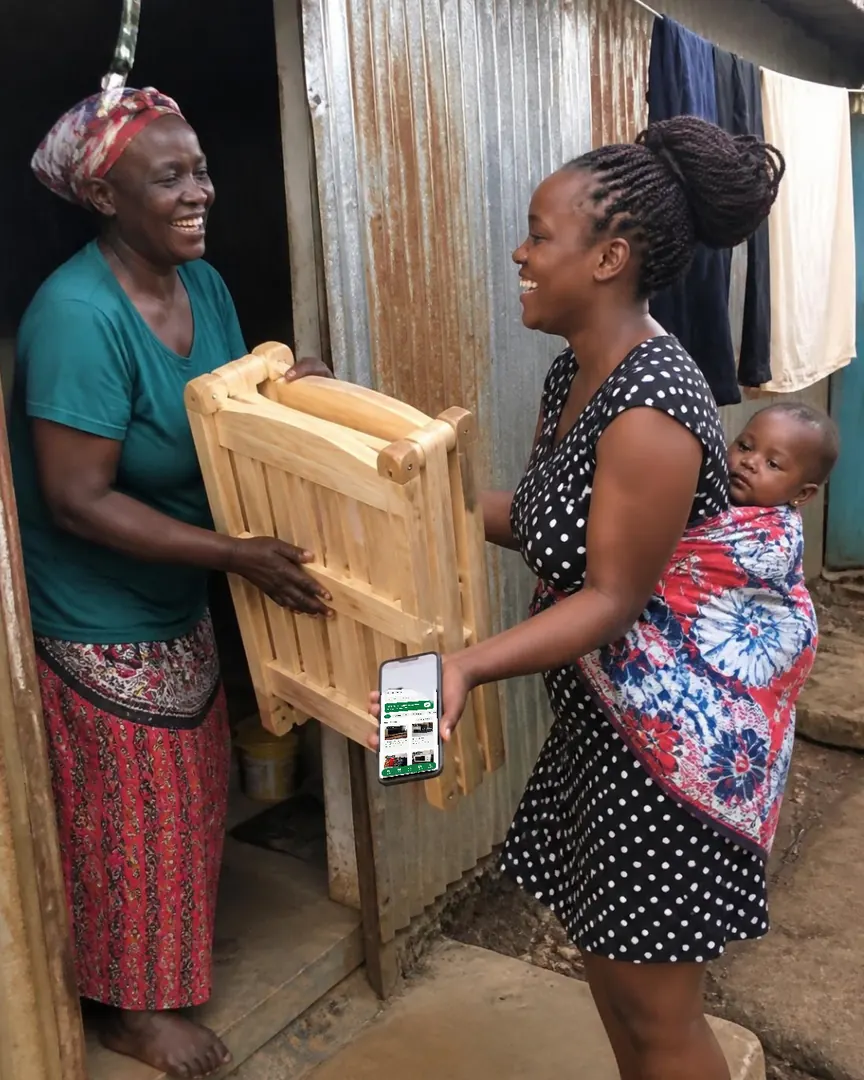
Kawangware
A cot, from one mother to the next
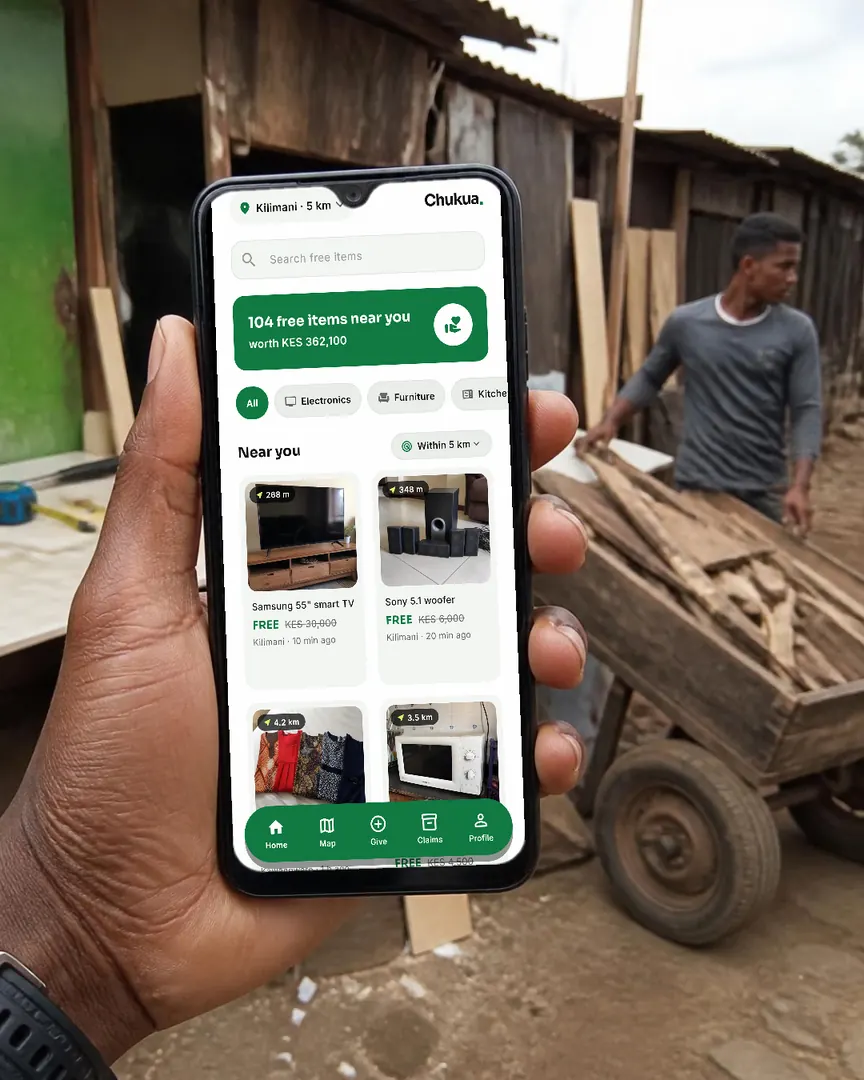
Gikomba
Offcuts, straight onto the mkokoteni
Why we built this
A sofa goes out because the new flat is smaller. A phone goes in a drawer because the screen cracked. The baby clothes go in a sack because the baby isn’t a baby anymore. None of it is rubbish. It gets thrown out because giving it away is a hassle and buying new is easy.
And the cost doesn’t land on the people throwing things out. In Nairobi, the city’s rubbish ends up at Dandora, right next to some of its poorest neighbourhoods. Waste always flows downhill, to whoever has the least say.
We think a working thing should go to a person before it goes to a dump. Chukua is how we’re making that normal.
62M tonnes
of electronics thrown out in 2022
Less than a quarter of it was properly collected and recycled. The rest gets burned, buried or picked apart by hand, often by people paid next to nothing.
Source: UN Global E-waste Monitor 2024
92M tonnes
of textile waste a year
Clothes get worn for less time than they used to. Meanwhile there are kids in your own neighbourhood who need exactly the sizes yours just outgrew.
Source: UN Environment Programme
3.4B tonnes
of waste a year by 2050
That’s up from about 2 billion in 2016, and at least a third of it is already dumped in the open or burned.
Source: World Bank, What a Waste 2.0
What we stand for
Chukua means “take” in Swahili. Everything in the app is built around one idea: in any city where we work, it should be easier to hand something on than to throw it out.
Recycling is what you do when nobody can use a thing anymore. Most of what gets thrown out isn’t there yet.
Givers never ask for money. If one does, report it and we act on it. Selling belongs somewhere else.
Only the giver knows who claimed their item. Taking a cot your neighbour doesn’t need is just good sense.
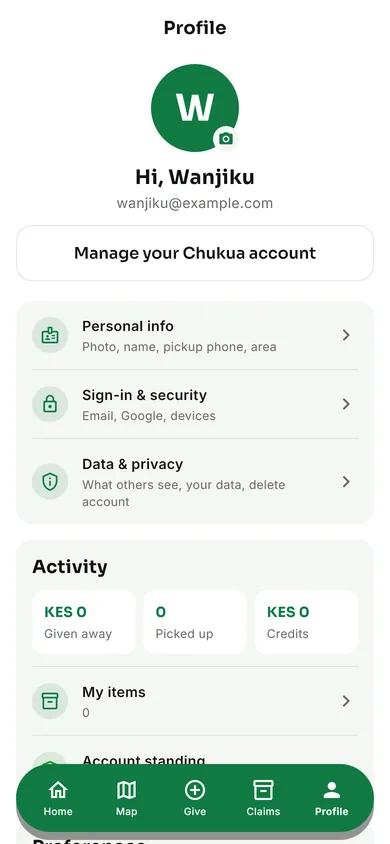
No ads. We don’t sell your data or use it to profile you. Export it or delete your account from the app whenever you like.
Giving is free and stays free. After the pilot, people who claim pay a small fee per item. That’s it. No ads, no selling data.For now, in Nairobi, claiming is free too.
Claim limits, no-show pauses and the block on phone numbers in listings all run on our server. Every app update is published with a checksum on GitHub, and the app won’t install one that doesn’t match.
Campuses at the end of term, landlords between tenants, movers, NGOs, city councils. If useful things pile up where you are, write to contact@chukua.xyz.
How it works
Open the app and you see what people within 5 km are giving away, newest first, with the distance on each one. Go up to 20 km or open the map if you don’t mind the trip.
Tap claim and it’s yours. Nobody else can take it after that. Claiming is free during the pilot.

You get the giver’s number and the exact spot. Sort out how you’ll carry it, go and get it, then mark it picked up.
Who it's for
You’re moving and the flat has to be empty by Friday. Post the fridge, the bed and the TV in one go, set the moving day as the deadline, and let people nearby come and take them.
Every campus empties out in the same week. The desk, the mattress, the sufuria and the revision books can go to next year’s students instead of the skip.
Cots and strollers get used for a few months and then sit in the store for years. A family down the road needs one this week.
A TV with a cracked screen still has a good board. Post it as "for parts" and the repair guy down the road gets spares. Offcuts and half tins of paint count too.
Why not just post it in the group
Features
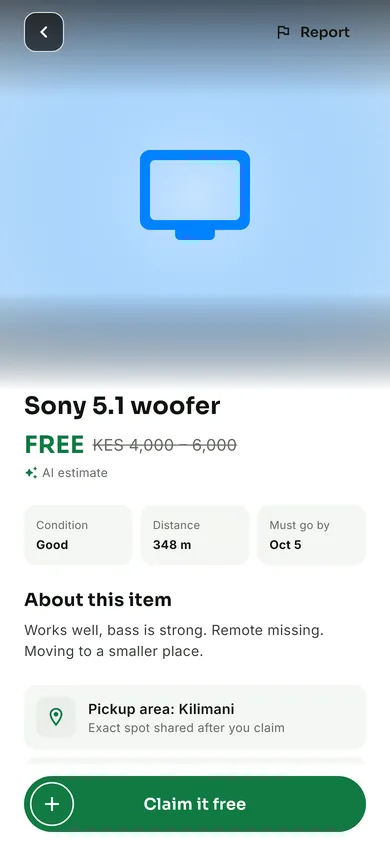
Every listing shows roughly what it would sell for, so you know if it’s worth the trip.
From your phone’s location or a pin you drop. 5 km by default, up to 20 km if you’ll travel.
People see roughly where you are, to about 500 m. Only the person who claimed gets the exact spot.
Pick 1, 3, 7 or 14 days. When the day passes the listing comes down by itself.
Everyone signs in with an email code or Google. No anonymous accounts. Miss two pickups and you can’t claim for a week.
English and Kiswahili on every screen. Every new city gets its own language.
Take or give
After the pilot, claiming will cost a small fee. It’s there so people only claim what they’ll actually collect, and it pays for the servers. Giving stays free, always. These are Kenyan prices; other cities get their own.
Free
during the pilot · then KES 50 per claim
Free
always
Safety and rules
They run on our server, not just in the app, so nobody can get around them.
3
open claims
at a time per person. Nobody gets to hoard.
2
no-shows
and you can’t claim for 7 days. The giver waited in for you.
20
listings a day
per giver. Enough to empty a flat, not enough to spam.
0
phone numbers
in listings. The app blocks them. Numbers are shared after a claim.
Giving it away well
Whether you use Chukua or not, this is what makes the difference between something getting a second life and something getting dumped again a week later.
Cities
Giving only works when there’s plenty on offer a short trip away. An app that’s open everywhere and empty everywhere helps nobody. So we go where people ask for it, and we stay until it works there.
36 neighbourhoods so far. Open the app anywhere in the city and it finds the one you’re in.
Tell us where you are. When it opens there, you’ll be the first to know. If you’re a giver, you’ll get in before everyone else.
People ask for their city with the form above. We look at it neighbourhood by neighbourhood, not country by country.
Once enough people in a place are ready to give, we let them in first, so the feed isn’t empty on day one.
The local language, the local way to pay, and rules that make sense there. Before anyone else joins.
Everyone who asked hears first. Then it opens to the rest of the city, one area at a time.
It isn’t on the Play Store yet, so you install it from the file. Point your phone camera at the code, or tap the button on your phone.
v1.3.5 · Android 7+ · 22 MB · all releases
Android · APK
The things are free and giving is free. After the pilot, claiming will cost KES 50 (KES 100 for things worth over KES 10,000), paid by M-Pesa in Kenya, so people only claim what they’ll collect. Right now, during the pilot, claiming is free too.
In groups, free things go to whoever replies fastest, and half of them never turn up. A small fee makes people think twice before claiming, and it keeps Chukua running without ads. The giver never asks you for money.
Your claim fee comes back as credit for your next claim, and the item goes back on the feed.
That’s up to you. Walk, boda, tuk tuk, mkokoteni, a friend’s pickup. Once you’ve claimed, Get directions opens the route in Google Maps, and I’m on my way tells the giver you’re coming.
No. Other people see your area to about 500 m. Only the person who claimed your item gets the exact spot, and the same goes for your phone number.
From what kind of thing it is, what the title says and its condition, rounded to a range. It’s there to tell you if the trip is worth it, not to put a price on it.
The giver marks it “didn’t show up” and the item goes live again. Two of those and that person can’t claim for 7 days.
Nairobi for now, in 36 neighbourhoods. We open cities one at a time, where people ask for it. You can ask for yours in the Cities section.
From the small claim fee, once a city is past its pilot. Giving is always free. No ads, and we don’t sell data.
Yes, please. End of term, end of a lease, an office move: that’s when useful things get thrown out in bulk. Write to contact@chukua.xyz.
Not yet. Most people in our first city use Android, so we started there. iPhone comes after the pilot.
English and Kiswahili on every screen. You can switch from your profile. Each new city gets its own language.